Flexographic printing is a high‑speed, relief printing method that uses flexible photopolymer plates to print packaging, labels and other continuous web products. You see its output on everyday items like snack bags, cereal boxes and shampoo labels. This versatility has made flexography the backbone of modern packaging, producing consistent, high-quality graphics on many types of materials while its continuous web-fed design supports long production runs with uniform color.
How does the flexographic printing process work?
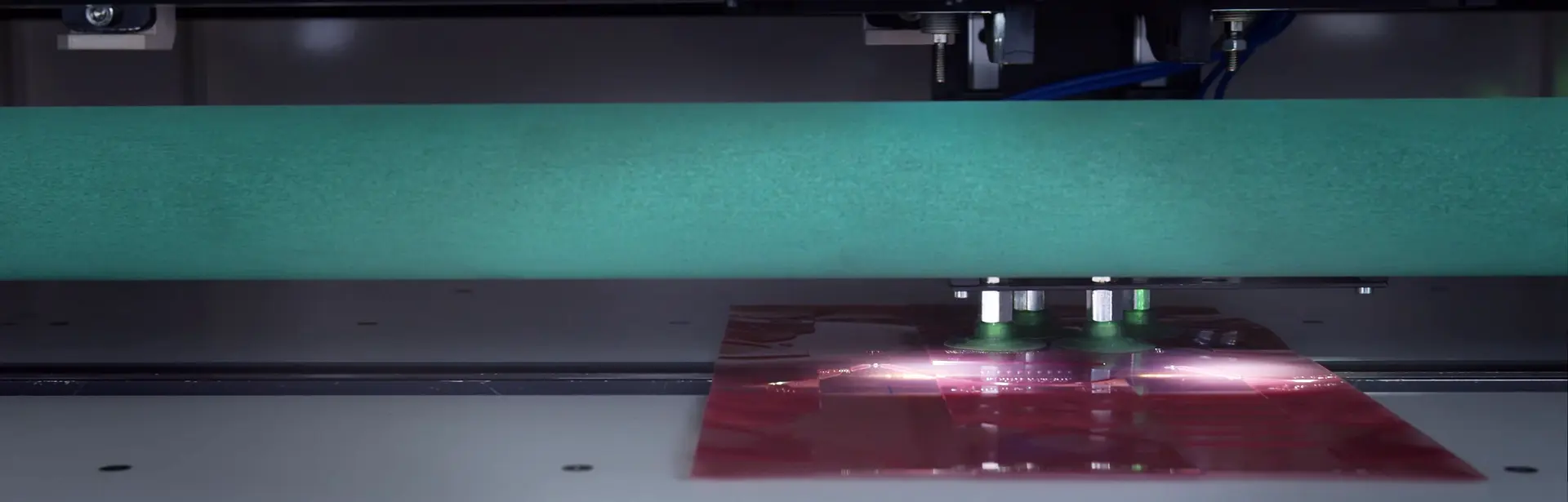
A typical flexographic printing process for packaging and labels involves several coordinated steps:
- Design & plate imaging – Artwork is created digitally and imaged onto a photopolymer plate.
- Plate mounting – The flexible plate is mounted onto a sleeve or cylinder with precise registration so that colors align.
- Inking & printing – An anilox roller meters a controlled amount of ink to the plate, which transfers the image to substrates such as paper, film, foil or corrugated board.
- Drying or curing – Solvent, water‑based or UV/LED inks are dried or cured so they don’t smudge.
- Finishing & rewinding – The web is inspected, cut, laminated or die‑cut, then rewound for shipment.
When all these stages work in harmony, flexo delivers crisp, functional packaging; when they don’t, misregistration, waste and downtime erode profits.
What are the key components of a flexo press?

A flexographic press is more than just cylinders and ink. Key components include:
- Plate cylinder or sleeve – Holds the flexible printing plate. Many presses use interchangeable sleeves to handle different repeat lengths.
- Anilox roller – Engraved cylinder that meters a precise volume of ink and delivers it to the plate.
- Ink station – Pumps ink from a reservoir to the anilox roller.
- Impression roller – Presses the substrate against the plate cylinder to transfer the image.
- Drying/curing units – Dry or cure inks using hot air, infrared, UV or LED lamps.
- Registration & control systems – Maintain alignment, tension and consistent colors.
- Sleeve handling & storage – Sleeves must be stored vertically and handled carefully to avoid damage; automated handling and storage solutions protect these critical components.
- Pre‑press cutting/engraving – Plates must be cut to size and marked for traceability; automated laser systems perform this task with precision.
Knowing these parts helps printers understand where problems arise and where automation can improve efficiency.
How can you ensure precise plate mounting and registration?
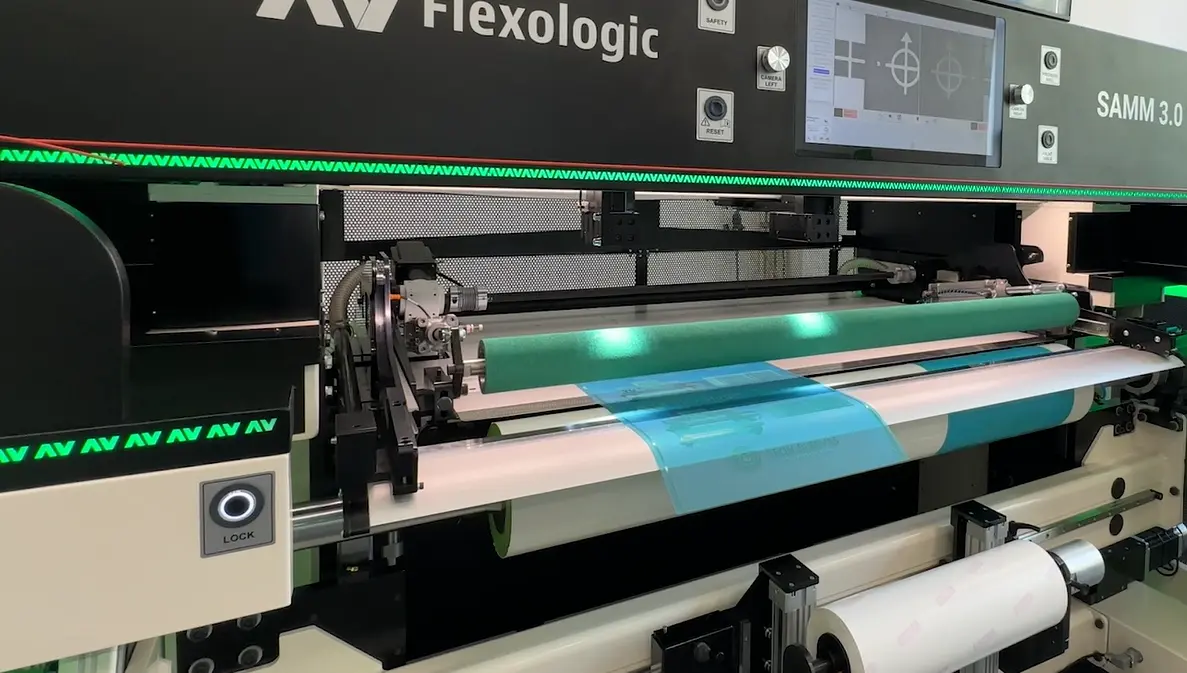
Accurate plate mounting is the foundation for high‑quality flexo printing. Mis‑registered plates lead to color shifts, press downtime and wasted material. AV Flexologic offers several plate mounting machines that address these challenges at different automation levels:
- FAMM 3.0 – A fully automatic plate mounting machine that uses back‑light technology, ultra‑HD cameras and robotics to position plates within ±2 µm. It reads QR codes on plates to verify their identity, produces a PDF quality report and can automatically load sleeves. This system eliminates human variability and is ideal for high‑volume plants demanding repeatable accuracy.
- SAMM series – Automatic mounters that combine image‑recognition software with robotic plate positioning to achieve around 5 µm accuracy. Features such as vacuum tables, automatic pressure rollers and quality reports accelerate setup. Options like the TIR sleeve measurement system check sleeve concentricity and surface quality.
- MOM series – Semi‑automatic and motorised mounters that bring digital calibration, motorised cameras and overlay software to mid‑sized operations. Operators still control parts of the process, but the machines maintain consistent registration.
- Niche mounters – For narrow‑web labels and specialised applications, AV Flexologic offers SAMM 2.0 800 and SAMM/MOM USD models with inverted workstations for ergonomic mounting and corrugated solutions like Flatmount and Optimount. Flatmount uses a patented overlay system and digital calibration to align plates on mylar sheets, while Optimount features a distortion‑compensating cylinder, motorised HD cameras and an automatic proofing cylinder.
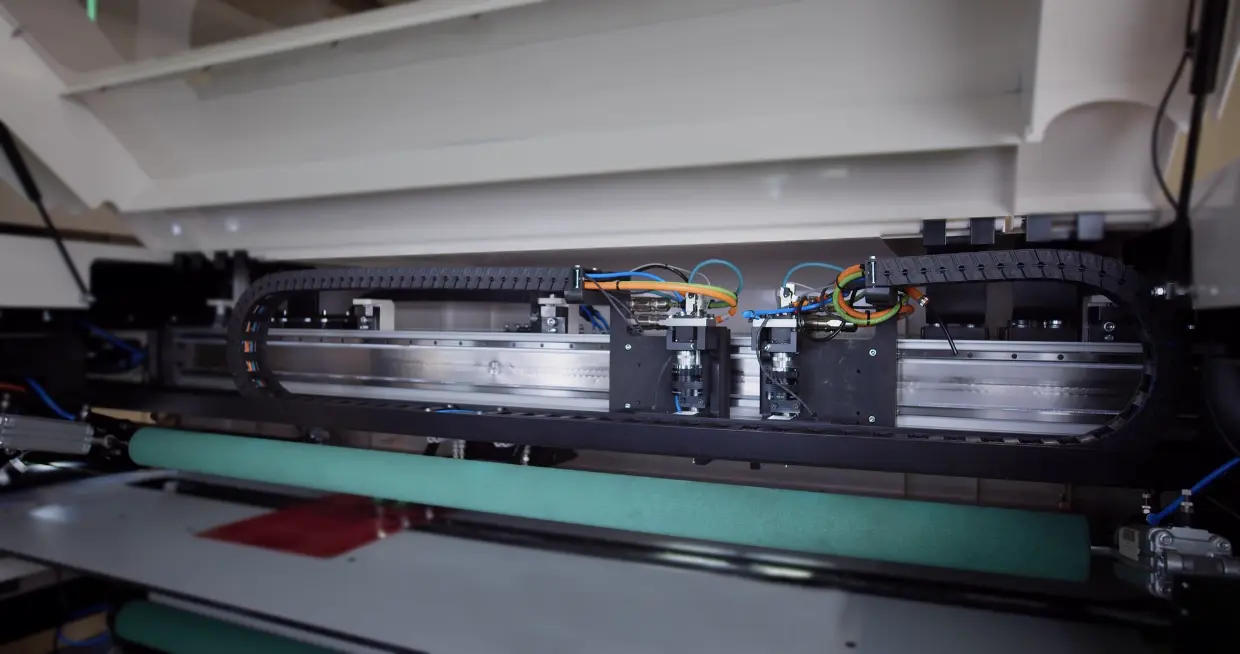
Whether you print wide‑web film, labels, corrugated board or a combination of processes, these mounters provide a scalable path to precise registration and reduced waste.
How can you reduce setup time and minimize downtime?

Frequent job changes, manual tape application and sleeve handling can eat into press uptime. Automation shortens setup and prevents human error:
- RoboCELL – A fully integrated prepress workflow. RoboSLEEVE automatically loads and unloads sleeves from a Tech Cart, adjusting for different diameters; RoboTAPE applies tape in a spiral pattern without bubbles; and a FAMM mounter finishes the job. The modules share a single interface, so one operator can set up a job and walk away while it mounts plate after plate.
- Automated sleeve management – Sleeve storage cabinets track inventory, automatically retrieve sleeves and protect them from damage. Tech Carts move sleeves safely around the shop with custom repeat sizes, 360° wheels and protective end‑rings. Modular storage racks hold sleeves vertically and can expand as your library grows.
- Inspection and demounting – A TIR sleeve measurement system scans a sleeve’s 3D surface using HD cameras and lasers to detect wear or out‑of‑round areas before mounting. A Demounter uses a rubber roller and foot pedal to remove plates and tape without damaging sleeves.
- Automated tape lamination – For corrugated plates, the Tape Laminator 1700 measures plate position, applies tape evenly with a foam roller and cuts it cleanly. Optional software stores lamination data for track‑and‑trace. These features speed up changeovers and reduce operator fatigue.
By reducing manual steps in the workflow, printers gain more uptime, consistent quality and lower labor costs.
How do you apply tape without bubbles and waste?
Manual tape application can introduce air inclusions, overlaps and uneven tension. AV Flexologic’s solutions tackle these issues head‑on:
- RoboTAPE – Spirally wraps tape around the sleeve or plate at the push of a button, eliminating bubbles and overlaps while cutting operator fatigue. It uses a large tape roll and an ergonomic station to keep the process smooth.
- Tape Laminator 1700 – Designed for corrugated plates, this machine measures the plate and laminates double‑sided tape evenly with a foam roller before cutting it precisely. Its optional lamination report system logs every job for quality control.
Automating tape application not only saves time but also reduces material waste and ensures consistent print quality.
How do you cut and identify plates efficiently?
Trimming plates by hand is time‑consuming and can damage expensive photopolymers. The EXACT laser cutting and engraving system uses an RF‑tube laser and linear motors to cut plates with ±0.010 mm precision in a single pass. The same laser can engrave QR codes or serial numbers into the plate surface for traceability. By eliminating knives and manual measurement, printers extend plate life and integrate seamlessly with automated mounters.
How do you handle hybrid offset processes?
Hybrid printing environments often combine flexo and offset. The VSOP Offset Mounter (also called a Sleeve Service Station) allows operators to mount offset plates or rubber blankets onto sleeves with accuracy. An overlay system and high‑resolution cameras show the operator how to align plates, while a vacuum table and robust steel frame provide stability. This station ensures repeatable positioning for variable‑repeat offset presses and reduces guesswork.
Final thoughts
Flexographic printing remains a vital process for packaging and labels, and automation is the key to staying competitive in 2025. By understanding how the flexographic printing process works and using AV Flexologic’s targeted solutions, printers can solve common challenges like plate mounting accuracy, setup efficiency, tape application, plate cutting and hybrid processes. These innovations reduce waste, increase throughput and deliver consistent print quality.
FAQ
Flexographic printing is mainly used for high volume packaging and label production. It can print on films, paper, foil, corrugated board and many other substrates at high speed.
If the plate is not mounted in the correct position, colors do not register correctly on press. That leads to visible misalignment, waste and long setup times. AV Flexologic systems such as FAMM 3.0 and SAMM use cameras and robotics to position plates with micrometer-level accuracy and generate a full mounting report.
AV Flexologic automation focuses on repeatability. RoboCELL can load sleeves, apply mounting tape in a controlled spiral pattern, and mount plates with minimal operator input. This shortens job changeover and keeps the press running.
Manual taping can trap air and create uneven pressure. RoboTAPE applies tape with a controlled spiral pattern, which prevents overlap and bubbles. For corrugated plates, the Tape Laminator 1700 measures the plate, applies tape evenly using a pressure roller, and cuts it cleanly.
Damaged or swollen sleeves affect print quality. AV Flexologic offers automated sleeve storage that manages inventory and prevents handling damage. The TIR Sleeve Measurement System scans a sleeve and reports wear or out of round areas before the sleeve ever reaches the press.
Yes. The EXACT laser system can cut flexo plates with very high precision and engrave QR codes or ID numbers directly into the plate surface. This removes manual knife work, improves safety and makes each plate traceable in production.
About the Author

Martijn Otten
Managing Director
Martijn Otten is the Managing Director of AV Flexologic and Tech Sleeves, leading companies in the flexographic printing industry. He holds an MSc in Mechanical Engineering and has over 20 years of experience in the field. Martijn's technical expertise and commercial drive have introduced significant advancements in automation technology for flexographic printing, winning several leading technical innovation awards such as the FTA Innovation Award (2x) and the FIA, EFTA, and FlexoTech Innovation Awards. A firm believer of Lean methodologies, Martijn continuously seeks to improve efficiency and eliminate waste in manufacturing processes, whether this is in-house at AV Flexologic or at customers process. His contributions to the industry extend beyond his leadership at AV Flexologic, as he regularly shares his insights on the future of automation in flexographic printing in various publications.