Introduction: Why Proper Demounting Matters
In the fast-turnaround world of flexographic printing, most attention is often given to plate mounting and press setup. Yet what happens after the job is finished—specifically how plates are demounted—has a critical impact on plate longevity, print quality, and operational efficiency. Improper demounting not only risks damaging expensive photopolymer plates, but also compromises future jobs and increases replacement costs. Understanding the right approach to plate demounting is essential for maintaining a lean, high-performance flexo workflow.
The Hidden Risks of Improper Plate Removal
Demounting a plate may seem like a straightforward task, but it can easily result in damage if not done correctly. When plates are removed with too much force or the wrong angle, they are prone to curling or cracking—especially along the edges. Adhesive residues can pull unevenly, creating permanent distortions. Additionally, tape left behind or removed aggressively can rip the plate backing or introduce contamination.
Improper demounting practices not only shorten the lifespan of the plates, but also lead to longer remounting times, lower print consistency, and higher costs for replacement. Even more, poorly handled plates may fail inspection during QC checks, resulting in unnecessary rework or delays.
Manual Demounting: Still Common, But Risky
Many print facilities still rely on manual methods for demounting plates—peeling them off by hand using scrapers or lifting tools. While this may work for small runs or non-critical jobs, it comes with drawbacks. Manual demounting is inconsistent and heavily dependent on operator technique. One operator may be careful and methodical, while another may rush through and damage the plates.
Ergonomically, the task can also cause strain. Pulling off tightly adhered plates or thick mounting tape requires force, which over time can contribute to repetitive strain injuries. In busy production environments, this adds risk—not only for the equipment but also for the people who run it.
Best Practices for Manual Plate Demounting
If demounting is done manually, there are several steps that can reduce damage:
- Always peel slowly, starting from a corner and keeping the plate close to the sleeve surface
- Avoid sharp bending or folding of the plate during removal
- Use clean hands or gloves to avoid transferring ink or grease
- Remove tape immediately after plate removal to avoid adhesive buildup
- Inspect each plate before storing and place it on a clean, flat surface with protective layers
These steps may seem basic, but skipping them even occasionally can significantly reduce the lifespan of your plates and sleeves.
The Shift to Demounting with a Demounting machine: Consistency and Protection
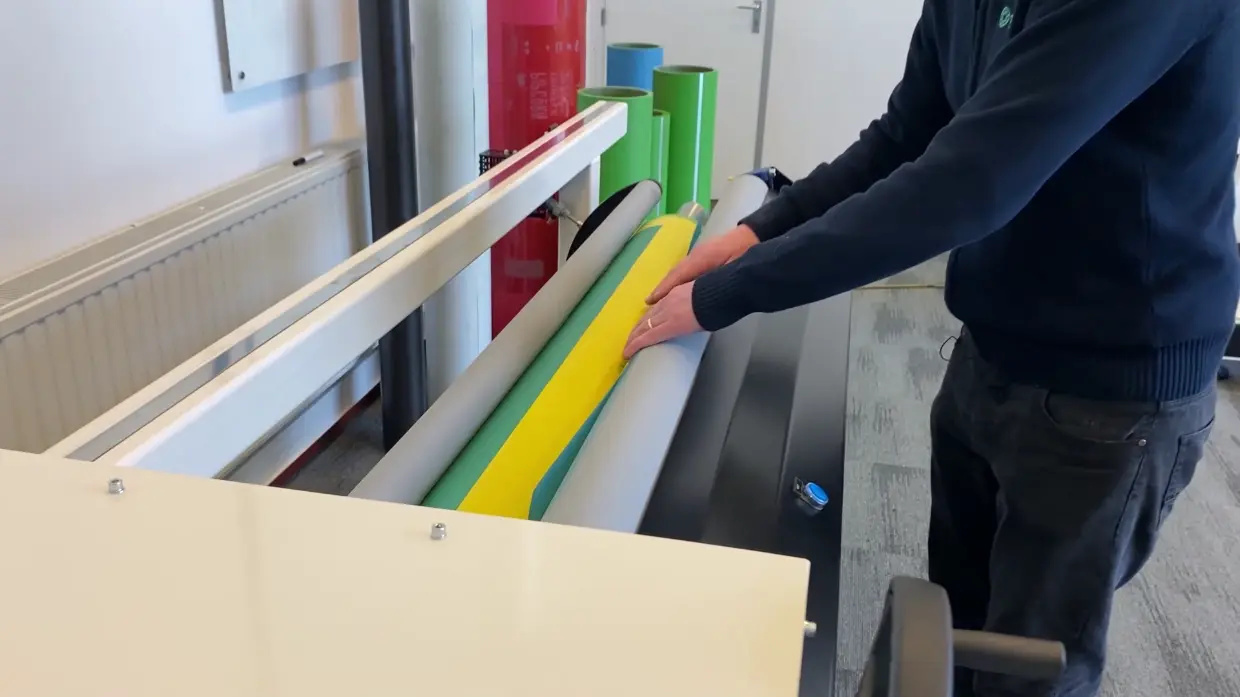
To eliminate the risks and inconsistencies of manual demounting, many flexo printers are moving toward driven plate demounters. These machines are designed to gently and consistently remove plates from sleeves or cylinders using a controlled, motorized peeling process. The automation ensures the right angle, speed, and tension every time—removing the guesswork from the process.
By controlling the force applied during removal, plate demounters minimize edge curling, eliminate cracking, and extend plate life. They also improve ergonomics, making the process safer and more efficient for operators. For facilities that handle large volumes of plates daily, automation also improves productivity and contributes to a more standardized workflow.
AV Flexologic’s Plate and Tape Demounter: A Smart Investment
AV Flexologic’s Plate Demounter combines precision, speed, and care in one solution. The machine automates both plate and tape removal using non-aggressive tensioning and lifting mechanisms. This approach ensures that plates are removed without damage and that the mounting tape comes off cleanly—avoiding the sticky residue and stretching common in manual removal.
The demounter’s user-friendly design accommodates various sleeve sizes and makes it easy to train new staff. With fast cycle times and consistent handling, it supports lean production goals while reducing the costs associated with plate damage or operator error. Many customers report a significant improvement in plate longevity and fewer quality issues on remounted jobs.
Conclusion: Plate Protection Starts with Proper Demounting
Flexo plates are a critical investment in print quality and operational efficiency. While much focus is placed on mounting them correctly, the demounting process deserves equal attention. Improper handling can lead to costly damage, rework, and waste. By following proper demounting practices—or better yet, adopting automated solutions—printers can protect their assets, reduce downtime, and standardize a key part of their production cycle.
In short, how you take plates off matters just as much as how you put them on. Investing in proper demounting isn’t just good practice—it’s smart business.
About the Author

Martijn Otten
Managing Director
Martijn Otten is the Managing Director of AV Flexologic and Tech Sleeves, leading companies in the flexographic printing industry. He holds an MSc in Mechanical Engineering and has over 20 years of experience in the field. Martijn's technical expertise and commercial drive have introduced significant advancements in automation technology for flexographic printing, winning several leading technical innovation awards such as the FTA Innovation Award (2x) and the FIA, EFTA, and FlexoTech Innovation Awards. A firm believer of Lean methodologies, Martijn continuously seeks to improve efficiency and eliminate waste in manufacturing processes, whether this is in-house at AV Flexologic or at customers process. His contributions to the industry extend beyond his leadership at AV Flexologic, as he regularly shares his insights on the future of automation in flexographic printing in various publications.